
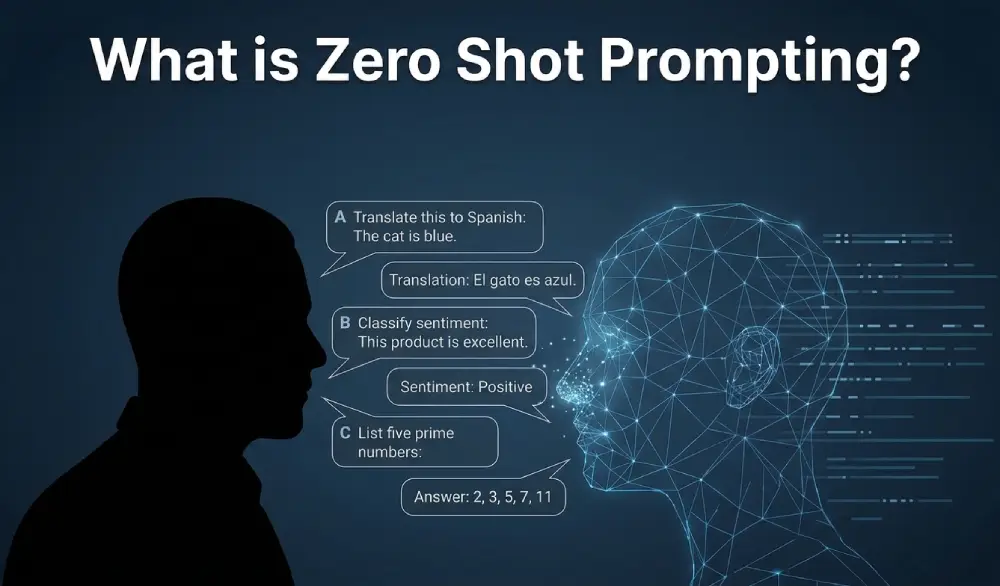
Zero-shot prompting is one of the most important concepts in modern AI, yet many people still find it confusing. In simple terms, zero-shot prompt means giving an AI a task without showing it any examples—and the AI still generates a useful answer. This ability comes from prior training, not from instructions given at that moment.
For instance, if you ask an AI to summarize a paragraph or explain a concept, it can respond instantly. It does not need a sample answer to copy. Therefore, zero-shot prompt allows faster and more flexible interactions with AI systems.
What Is Zero-Shot Prompting in AI?
Zero-shot prompt refers to a situation where the AI receives only a prompt (instruction) and no example output. As a result, the model relies entirely on its pre-trained knowledge.
Key Characteristics of Zero-Shot Prompt
- No examples are provided
- The AI responds immediately
- It uses general knowledge learned during training
- It works best for simple or common tasks
Because of these features, zero-shot prompt is widely used in chatbots, content tools, and automation systems.
How Zero-Shot Prompting Works
When you use zero-shot prompt, the AI processes your instruction and predicts the most likely response. It does not “learn” in real-time. Instead, it uses patterns it already knows.
For example:
Prompt: “Explain artificial intelligence in simple terms”
Result: The AI generates a clear explanation without any example
Therefore, zero-shot prompt depends heavily on how well the AI was trained beforehand.
Benefits of Zero-Shot Prompting
Why Zero-Shot Prompt Is Useful
There are several reasons why zero-shot prompt has become popular:
- First, it saves time because no examples are needed
- Second, it simplifies prompt writing
- In addition, it works well for general tasks
- Finally, it allows quick experimentation
Because of these advantages, many users prefer zero-shot prompt for everyday AI tasks.
Limitations of Zero-Shot Prompting
Although zero-shot prompt is powerful, it has some limitations:
- It may produce inconsistent results
- It may not follow a specific format
- It can struggle with complex instructions
Therefore, if you need precise output, you may need to provide examples.
Zero-Shot Prompting vs Few-Shot Prompting
Key Differences in Prompting Methods
Zero-shot prompting and few-shot prompting are often compared.
- Zero-shot prompt: No examples are given
- Few-shot prompt: One or more examples are provided
For example, if you want a specific writing style, few-shot prompting works better. However, for quick answers, zero-shot prompt is usually enough.
Real-World Uses of Zero-Shot Prompting
Where Zero-Shot Prompting Is Applied
Today, zero-shot prompt is used in many areas:
- Content writing and rewriting
- Chatbots and customer support
- Language translation
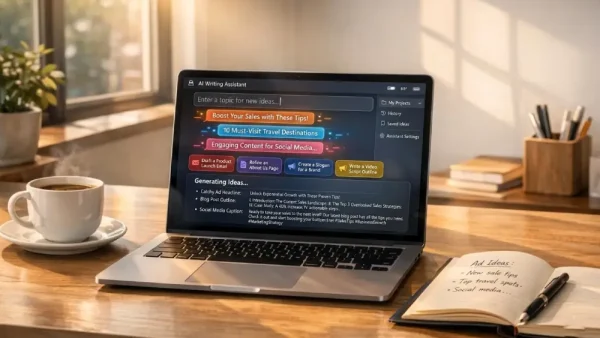
- Idea generation and brainstorming
Companies like OpenAI and Google use zero-shot prompt in their AI systems to improve user experience.
Final Thoughts
In conclusion, zero-shot prompt is a simple yet powerful way to interact with AI. It allows users to get answers quickly without providing examples. However, for more structured or detailed outputs, combining it with other techniques can be helpful.
As AI continues to evolve, zero-shot prompt will remain a key method for making AI tools faster, easier, and more accessible.