

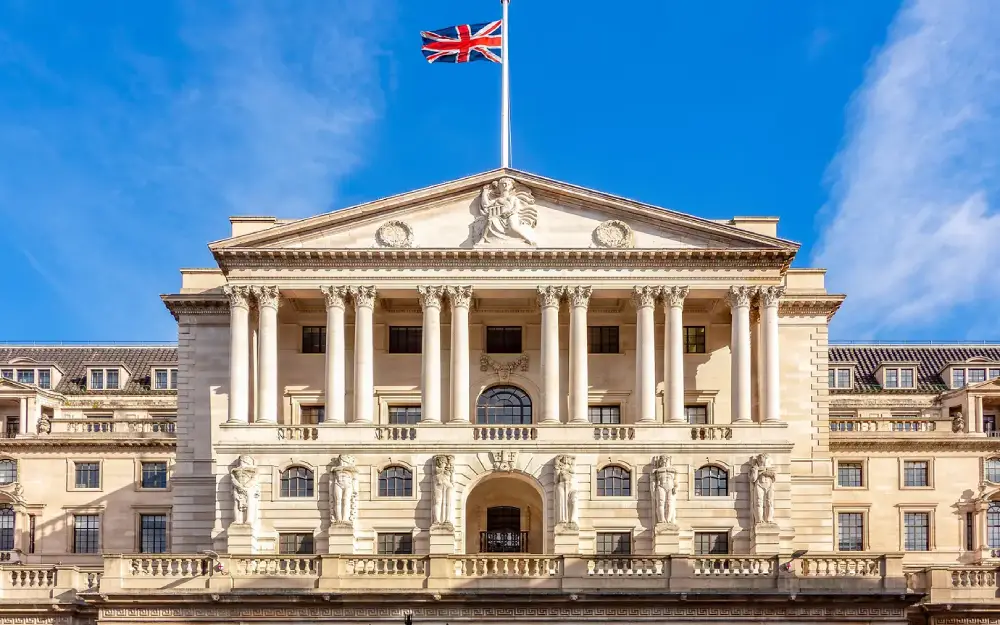
AI risks in financial markets are no longer a distant concern—they are now a real focus for global regulators. In recent months, central banks have started testing how artificial intelligence could affect the stability of financial systems. Most notably, the Bank of England has begun running simulations to understand how AI-driven trading could behave during periods of stress.
As a result, experts are asking an important question: could AI systems trigger the next financial crisis?
Why AI Risks in Financial Markets Are a Serious Concern
The rise of AI in finance has brought speed, efficiency, and automation. However, it has also introduced new risks. Today, many trading systems rely on algorithms that can react in milliseconds. While this improves performance, it also creates the risk of sudden and unpredictable market movements.
The Core Problem: Herding Behavior
One of the biggest AI risks in financial markets is something known as “herding behavior.” In simple terms, this happens when multiple AI systems make similar decisions at the same time.
For example:
- Many AI models may detect the same market signal
- They may all decide to sell at once
- This can lead to a rapid drop in prices
Therefore, instead of stabilizing the market, AI could amplify volatility.
How Central Banks Are Testing AI Risks in Financial Markets
To better understand these threats, central banks are now taking action. The Bank of England is leading efforts to simulate extreme scenarios involving AI-driven trading.
What These Tests Involve
- First, regulators create virtual financial environments
- Then, they introduce AI trading systems into these simulations
- Next, they observe how these systems react to shocks
- Finally, they analyze whether AI increases or reduces risk
Because of this approach, central banks can prepare for potential crises before they happen.
AI Risks in Financial Markets vs Traditional Risks
Financial markets have always faced risks. However, AI risks in financial markets are different in several key ways.
Key Differences
- Speed: AI reacts faster than human traders
- Scale: AI systems can control massive amounts of capital
- Complexity: AI decisions are often difficult to predict
- Interconnection: Systems can influence each other instantly
As a result, a small issue can quickly turn into a large-scale problem.
The Role of Big Tech in AI-Driven Finance
Large technology companies are also shaping the future of AI in finance. Firms like Google and Microsoft continue to develop powerful AI systems that can process huge datasets.
While these innovations improve financial tools, they also increase dependency on AI. Therefore, regulators must balance innovation with safety.
Real-World Example: Flash Crashes and AI Influence
Even before advanced AI, markets have experienced sudden crashes. Events like flash crashes showed how automated systems could disrupt trading.
Now, with more advanced AI, the AI risks in financial markets are even greater:
- AI can analyze news, social media, and trends instantly
- It can execute trades without human approval
- It can react to other AI systems in real time
Because of this, the market can move faster than ever before.
How Governments Plan to Reduce AI Risks in Financial Markets
Governments and regulators are not ignoring these risks. In fact, they are actively working on solutions.
Key Strategies
- Creating stricter rules for AI-based trading
- Increasing transparency in algorithms
- Requiring human oversight in critical decisions
- Running regular stress tests on financial systems
Moreover, international cooperation is increasing, as financial markets are globally connected.
The Future of AI Risks in Financial Markets
Looking ahead, AI risks in financial market will continue to evolve. On one hand, AI can improve efficiency and reduce human error. On the other hand, it can introduce new forms of instability.
Therefore, the future depends on how well regulators, companies, and developers manage these risks. If handled correctly, AI can strengthen financial systems. However, if ignored, it could create serious challenges.
Final Thoughts
In conclusion, AI risks in financial markets are becoming one of the most important issues in global finance. Central banks like the Bank of England are taking early steps to understand and control these risks.
At the same time, the rapid growth of AI means that action must be taken quickly. The balance between innovation and stability will define the future of financial markets.


