

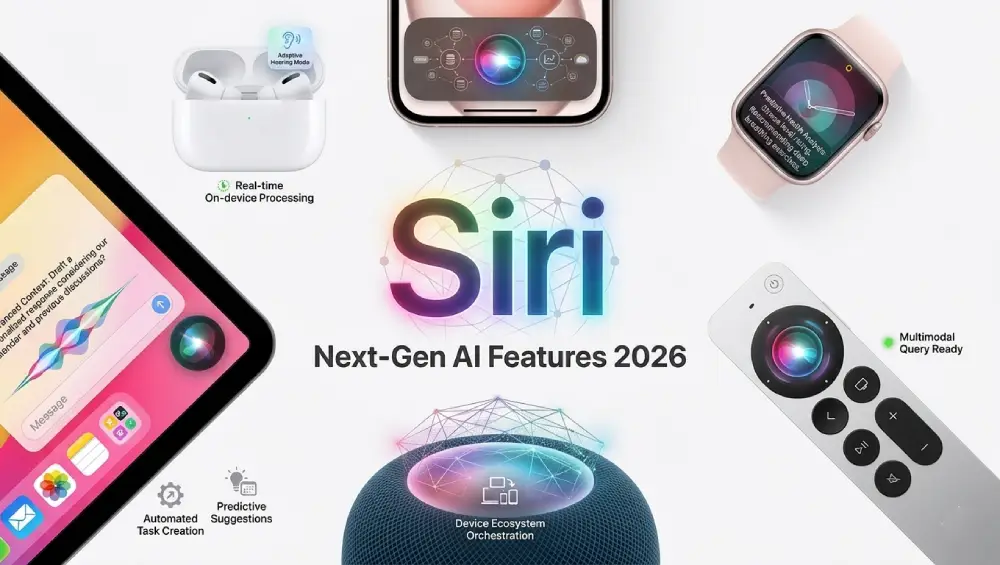
In 2026, Apple AI 2026 is marking a major leap forward as Apple Inc. pushes deeper into artificial intelligence, quietly reshaping how millions of users interact with their devices. At the center of this transformation is Siri — a voice assistant that, for years, lagged behind competitors but is now undergoing one of the most significant upgrades in its history.
The latest Apple AI 2026 developments signal a shift from simple voice commands to deeply personalized, context-aware interactions that feel less like using a tool and more like having a digital companion.
Apple AI 2026: A New Era for Siri
Apple’s refreshed Siri is no longer just about setting reminders or checking the weather. With next-generation AI models running both on-device and in the cloud, Siri is becoming far more conversational and intelligent.
Users can now speak naturally without structuring commands in a specific way. Instead of saying, “Set a reminder for 7 PM,” you can say, “Remind me tonight to call mom,” and Siri understands the intent instantly — including what “tonight” means based on your habits.
This improvement comes from Apple’s investment in advanced language models designed to prioritize privacy while still delivering powerful AI capabilities.
Deep Integration Across Apple Devices
One of the standout features of Apple AI 2026 is how seamlessly Siri works across the Apple ecosystem. Whether you’re on an iPhone, iPad, Mac, or even Apple Watch, Siri maintains context across devices.
For example, you could start drafting an email on your Mac and later ask Siri on your iPhone, “Finish that email I was writing earlier,” and it will pick up right where you left off.
This level of continuity highlights Apple’s strategy: making AI feel invisible yet indispensable.
On-Device Intelligence and Privacy Focus
Unlike many competitors, Apple continues to emphasize on-device processing. Much of Siri’s intelligence now runs directly on your device, reducing reliance on cloud servers.
This approach offers two key benefits:
- Faster response times
- Stronger user privacy
In Apple AI 2026, personal data like messages, photos, and calendar events are analyzed locally whenever possible. This ensures that sensitive information stays secure while still enabling personalized experiences.
Smarter Personalization
Siri now adapts to user behavior over time. It learns routines, preferences, and even communication styles.
For instance:
- It may suggest leaving earlier for work if traffic patterns change
- Recommend apps based on time of day
- Automatically prioritize notifications based on importance
These features make Siri feel proactive rather than reactive — a major shift from previous versions.
AI-Powered App Interactions
Another major upgrade is Siri’s ability to interact more deeply with third-party apps. Developers now have expanded APIs that allow Siri to perform complex, multi-step actions within apps.
Imagine saying:
“Plan my weekend trip,”
and Siri can:
- Search destinations
- Compare prices
- Book tickets
- Add plans to your calendar
All without switching between apps.
Natural Conversations and Context Awareness
One of the most noticeable improvements in Apple AI 2026 is conversational memory. Siri can now remember context within a conversation.
For example:
User: “What’s the weather in Mumbai?”
Siri: “It’s 32°C and humid.”
User: “Will it rain tomorrow?”
Siri understands that “tomorrow” refers to Mumbai — no need to repeat the location.
This kind of contextual awareness brings Siri closer to human-like interaction.
What This Means for iPhone Users
For everyday users, these updates translate into:
Less friction when using devices
Faster task completion
A more intuitive experience overall
Instead of navigating apps manually, users can rely on Siri to handle tasks efficiently through natural conversation.
The Bigger Picture: Apple’s AI Strategy
Apple AI 2026 isn’t just about improving Siri — it reflects a broader shift in Apple’s long-term vision. The company is positioning AI as a core layer of its ecosystem, much like iOS itself.
By focusing on privacy, seamless integration, and user-centric design, Apple is carving out a unique space in the AI race — one that doesn’t rely solely on massive cloud infrastructure but instead blends local intelligence with smart cloud support.
Final Thoughts
Siri’s transformation in Apple AI 2026 marks a turning point. What was once seen as a limited voice assistant is now evolving into a powerful, context-aware AI system deeply embedded in everyday life.
As Apple continues refining these features, the line between human intent and machine execution is becoming increasingly blurred — and for users, that means technology that finally feels like it understands them.