

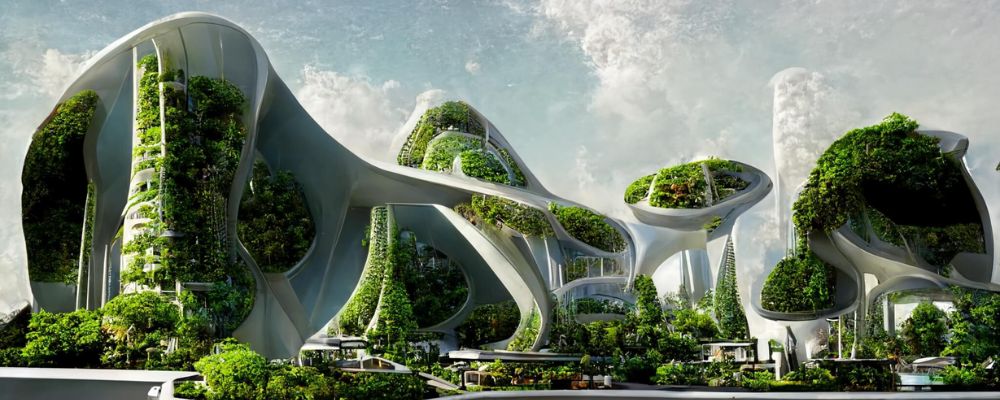
As urban areas expand, the need for innovative and sustainable solutions in architecture becomes critical. Artificial intelligence (AI) is revolutionizing this field, offering new ways to create smart and eco-friendly cities. This blog explores how AI-generated architecture is transforming urban landscapes, making them more efficient and resilient.
The Role of AI in Modern Architecture
AI is transforming various sectors, including architecture. By leveraging AI-driven tools and algorithms, architects are designing buildings and urban spaces that are both functional and sustainable. Here’s a look at how AI is making a difference:
AI in Urban Planning
AI can analyze extensive data sets, aiding in urban planning and addressing future challenges. For instance, machine learning algorithms help predict traffic patterns, assess environmental impacts, and optimize land use.
Predictive Modeling and Simulation
AI technologies such as predictive modeling and simulation enable architects and city planners to anticipate the outcomes of various design choices. This capability allows for informed decisions that enhance both functionality and sustainability in urban spaces.
Generative Design in Architecture
Generative design, powered by AI, allows architects to set design goals and constraints. Subsequently, AI explores numerous design options to identify the most effective solutions. This approach results in innovative structures that traditional methods might not reveal.
Examples of AI-Driven Generative Design
- Optimized Building Layouts: AI creates layouts that maximize space utilization and energy efficiency.
- Eco-Friendly Materials: AI assists in selecting sustainable materials that minimize the carbon footprint of buildings.
Smart Cities and Sustainable Infrastructure
AI-generated architecture is essential for developing smart cities—urban areas that leverage technology and data to enhance quality of life. Sustainable infrastructure is a key aspect of these cities, aiming to reduce environmental impact and improve livability.
Sustainable Building Practices
AI supports sustainable building practices by optimizing energy use, managing resources, and reducing waste. For example:
Energy Management Systems
AI-powered energy management systems adjust heating, cooling, and lighting based on real-time data. This leads to significant energy savings and reduced operational costs.
Waste Reduction Strategies
AI also helps in minimizing construction waste by predicting material needs and optimizing supply chains. Consequently, resources are used more efficiently.
Enhancing Urban Mobility
Efficient transportation systems are crucial for smart cities. AI contributes to this by improving traffic management, enhancing public transit, and developing smart infrastructure for autonomous vehicles.
Traffic Flow Optimization
AI algorithms analyze traffic patterns to optimize signal timings and reduce congestion. As a result, traffic flow becomes smoother and emissions decrease.
Autonomous Vehicles and Infrastructure
AI supports the integration of autonomous vehicles into urban environments. This requires smart infrastructure that communicates with these vehicles, ensuring safe operation.
The Future of AI in Urban Architecture
Looking ahead, AI’s role in architecture and urban planning will grow even more significant. Future advancements may include:
Advanced AI Algorithms
New algorithms will enhance AI’s ability to generate innovative designs, predict outcomes, and optimize resources. This will push the boundaries of architectural design.
Integration with IoT and Smart Technologies
The combination of AI with the Internet of Things (IoT) and other smart technologies will create more responsive and adaptable urban environments. Consequently, the overall quality of life will improve.
Ethical Considerations and AI Governance
As AI becomes more integrated into urban planning, ethical considerations and governance will be crucial. Ensuring transparency, fairness, and security in AI systems will be essential for achieving sustainable development goals.
Conclusion
AI-generated architecture is leading the way in creating smart and sustainable cities. By harnessing artificial intelligence, architects and urban planners are designing spaces that are efficient, eco-friendly, and innovative. As technology evolves, AI’s potential in architecture will continue to expand, offering exciting possibilities for the future of urban living.