
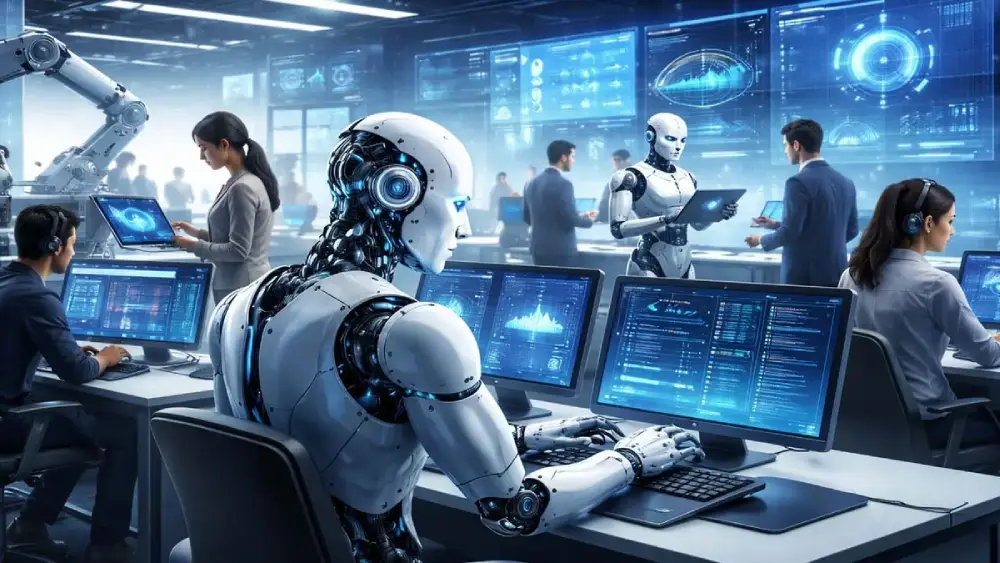
The topic AI replaces coding jobs 2026 has become one of the most discussed trends in the tech industry. As artificial intelligence continues to evolve rapidly, companies are increasingly adopting automation tools that can write, debug, and optimize code faster than ever before. This shift is directly linked to rising tech layoffs and a major transformation in software development careers.
AI Replaces Coding Jobs 2026: What’s Really Happening?
The phrase AI replaces coding jobs 2026 reflects a growing reality where AI-powered systems are taking over repetitive and even mid-level programming tasks. Tools like AI coding assistants are now capable of generating production-ready code, reducing the need for large development teams.
Big tech companies are restructuring their workforce as automation improves efficiency. According to recent industry reports, many organizations are cutting back on junior developer roles while increasing investment in AI infrastructure.
Related reading:
Tech Layoffs and Automation Growth
The rise of AI is directly contributing to tech layoffs. Companies are no longer scaling teams in traditional ways. Instead, they are relying on machine learning models and AI copilots to handle tasks that previously required entire engineering teams.
This doesn’t mean developers are becoming irrelevant — but the skillset demand is shifting toward:
- AI system integration
- Prompt engineering
- Advanced architecture design
- AI-assisted development workflows
Impact on Software Development Careers
The keyword AI replaces coding jobs 2026 is not about total job elimination, but transformation. Entry-level coding roles are shrinking, while AI-supervised engineering roles are increasing.
Developers who adapt to AI tools will remain highly valuable. In fact, many companies now expect engineers to collaborate with AI systems instead of writing everything manually.
Conclusion
The trend of AI replacing coding jobs in 2026 highlights a major shift in the tech industry. While automation is reducing traditional coding workloads, it is also creating new opportunities for skilled professionals who can work alongside AI systems.
The future of software development is not job-less — it is AI-augmented.