 Andew Smith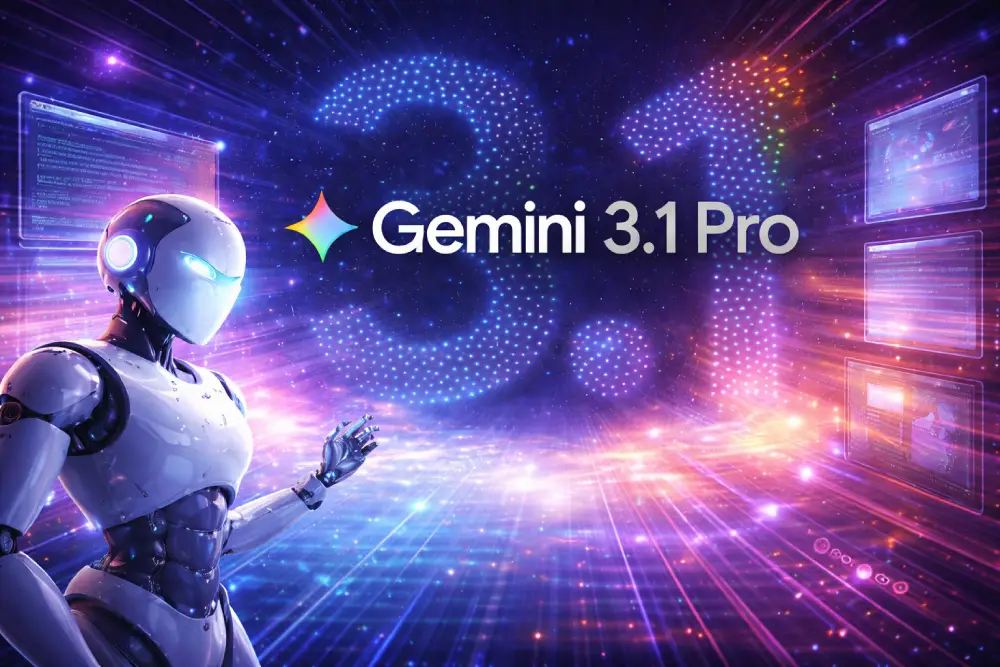
Google DeepMind has officially launched Gemini 3.1 — one of the most capable multimodal AI models available in 2026. With real-time voice and image analysis, a 1-million-token context window, and a revolutionary compression algorithm that reduces memory requirements by six times, Gemini 3.1 is a powerhouse for both consumers and enterprises. In this blog, we break down everything you need to know about Gemini 3.1, from its core features to its pricing and competitive positioning.
What is Google Gemini 3.1?
Gemini 3.1 is the latest iteration of Google DeepMind’s flagship AI model family. It is a multimodal model, meaning it can process and generate content across text, images, audio, video, and code — all within a single unified architecture. The Pro variant of Gemini 3.1 scored an impressive 77.1% on the ARC-AGI-2 benchmark, placing it among the world’s most capable reasoning models.
Key Features of Gemini 3.1
Gemini 3.1 Pro boasts a 1-million-token context window, allowing it to analyze entire books, lengthy codebases, or extended video transcripts in a single prompt. It supports real-time voice interaction and live image analysis, making it ideal for customer service, live translation, and interactive education. Google’s new TurboQuant compression algorithm further enhances Gemini 3.1 by reducing memory requirements by a factor of six — dramatically lowering inference costs without compromising performance.
Gemini 3.1 and Google’s TurboQuant Technology
TurboQuant is Google’s breakthrough compression algorithm that ships alongside Gemini 3.1. By applying aggressive quantization techniques, TurboQuant allows frontier-level models to run on significantly less hardware. For startups and small businesses, this means access to powerful AI capabilities at a fraction of previous costs. This is one of the most impactful efficiency breakthroughs in AI infrastructure in 2026.
Use Cases for Gemini 3.1
Enterprises are deploying Gemini 3.1 for customer service automation with real-time voice, content generation at scale, multimodal document analysis, and live video summarization. Developers are using its API for building smart assistants, coding tools, and data analysis pipelines. Educators are integrating Gemini 3.1 into personalized learning platforms that adapt to individual student needs in real time.
Gemini 3.1 vs Claude Mythos 5 vs GPT-5.4
Each of 2026’s frontier models has carved out a distinct niche. Gemini 3.1 leads in multimodal versatility and cost efficiency. Claude Mythos 5 leads in long-range reasoning and professional-grade reliability. GPT-5.4 leads in autonomous computer use. For most businesses, the right choice depends on the specific use case. Gemini 3.1 is the best all-around option for organisations needing a cost-effective, multimodal AI solution.
Conclusion
Google Gemini 3.1 is a formidable addition to the 2026 AI landscape. Its multimodal capabilities, million-token context window, and TurboQuant-powered efficiency make it one of the most versatile AI models available today. Whether you are building a startup, managing an enterprise, or exploring AI for personal productivity, Gemini 3.1 deserves a serious look. The future of AI is multimodal, and Gemini 3.1 is leading the charge.