

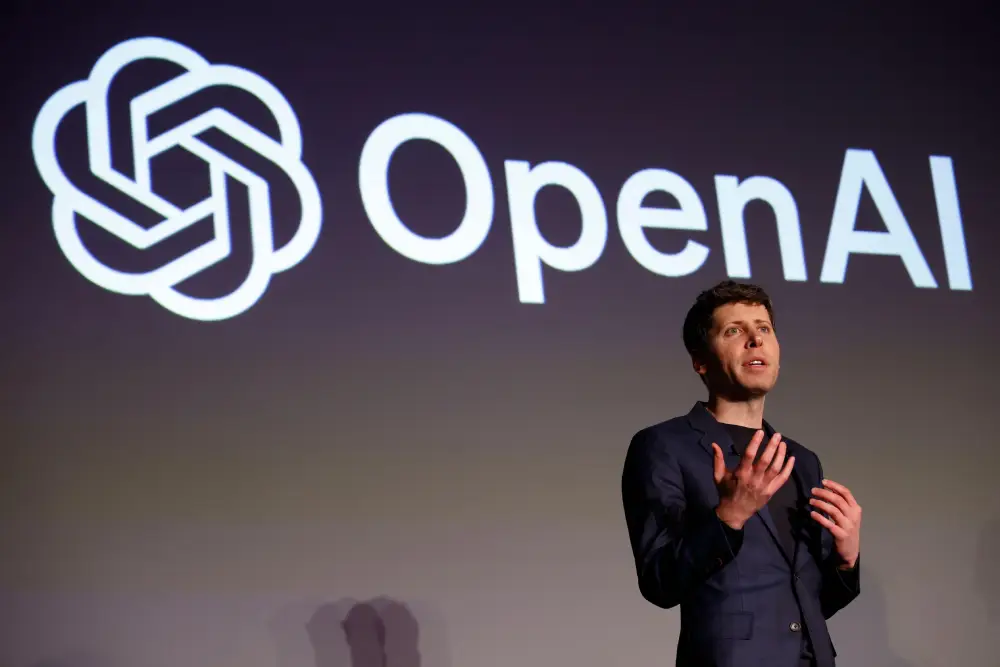
The OpenAI AI market slowdown has become a major talking point across the tech and investment world. Recent reports suggesting weaker-than-expected revenue and user growth at OpenAI have sparked fresh concerns about the broader artificial intelligence sector. As a result, investors are rethinking whether the rapid AI boom is truly sustainable or if the market is heading toward an inflated bubble correction.
OpenAI AI market slowdown and why it matters
The OpenAI AI market slowdown is not just about one company—it reflects broader uncertainty in the AI industry. Over the past two years, AI-related stocks surged on expectations of massive adoption, enterprise integration, and exponential revenue growth. However, any signs of missed targets from a leading player like OpenAI immediately ripple across the entire market.
Tech analysts suggest that expectations may have grown faster than real-world monetization. While AI usage continues to rise, converting that usage into consistent, high-margin revenue remains a challenge for many companies in the space.
Investor reaction to the OpenAI AI market slowdown
Following the news of potential misses in revenue and user growth targets, AI-related stocks saw noticeable volatility. Companies heavily tied to AI infrastructure, chips, and software experienced sell-offs as investors reassessed valuations.
Market sentiment has shifted from “growth at any cost” to a more cautious approach focused on profitability and real adoption metrics. According to broader tech market discussions, this could mark the beginning of a more selective AI investment phase rather than a blanket AI boom.
Is the AI boom turning into a bubble?
The OpenAI AI market slowdown has revived one of the most debated questions in tech: is AI in a bubble?
Optimists argue that this is a normal correction phase in a long-term transformation cycle. AI is still being integrated into healthcare, finance, education, and enterprise tools at scale. However, skeptics point out that valuations across the sector may have outpaced actual revenue generation.
Even OpenAI’s evolving business model highlights this tension—balancing massive compute costs with the need for sustainable monetization.
What happens next for the AI market?
Despite short-term uncertainty, most analysts agree that AI is not losing relevance. Instead, the market may be entering a maturity phase where only companies with strong revenue models and real-world adoption survive long-term pressure.
The OpenAI AI market slowdown could therefore act as a reset point—filtering hype-driven investments from fundamentally strong AI businesses.
Enterprise adoption, regulatory clarity, and improved efficiency in AI models will likely determine the next growth phase.
Conclusion
The OpenAI AI market slowdown has become a signal of caution for investors across the tech sector. While it has triggered fears of an AI bubble, it also highlights a necessary shift from hype-driven growth to sustainable business fundamentals. The coming months will reveal whether AI continues its explosive trajectory or enters a more measured and stable growth cycle.